
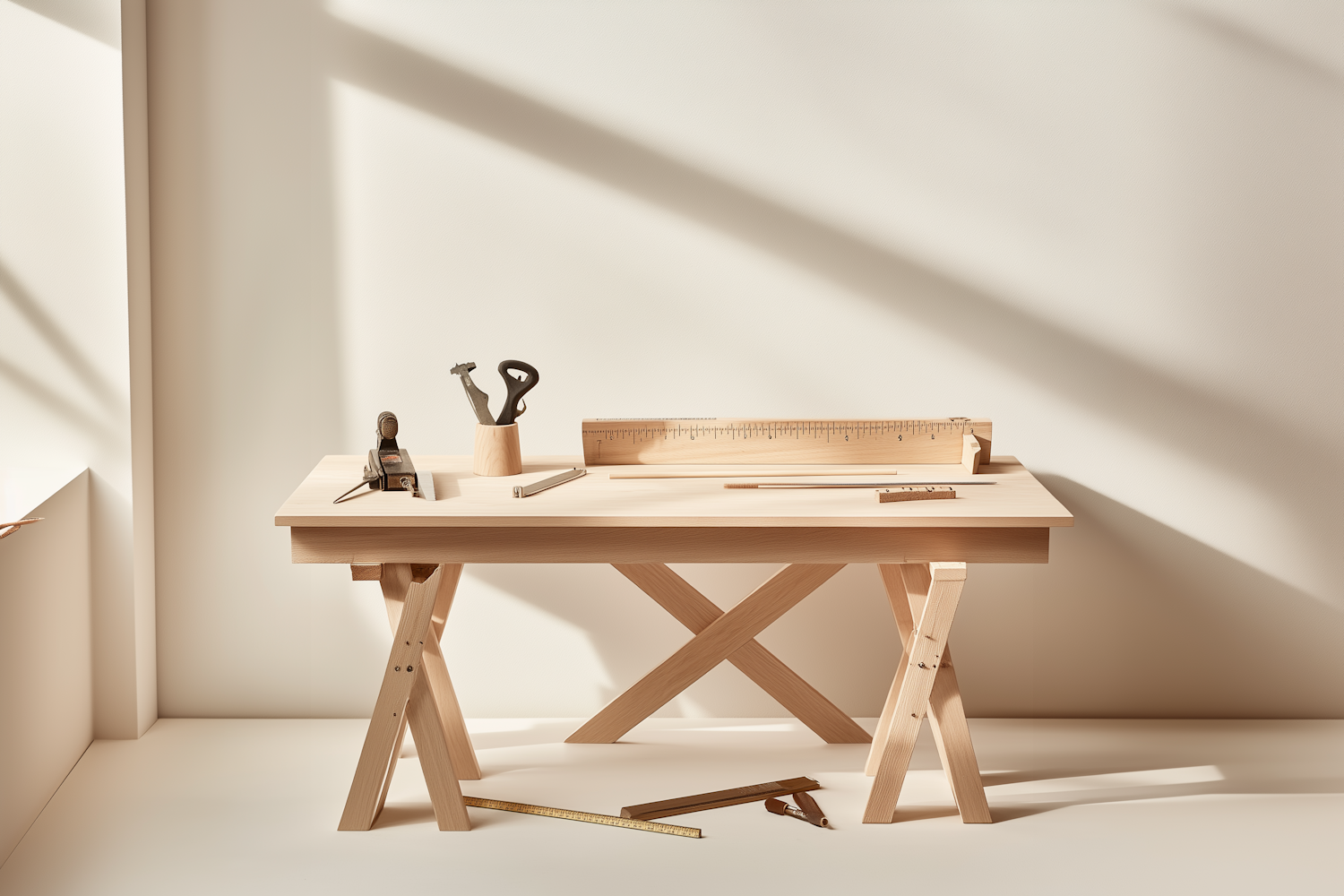
There is a woodworker's argument that hand tools make you faster, not because they cut quicker, but because they make a bad cut expensive enough that you measure twice. Software has the same dynamic and almost none of the humility about it.
Speed at the wrong layer
Most tooling optimizes the part of the work that was never the bottleneck. Generating twelve variations in a second is only useful if choosing between them was easy, and it never is. Meanwhile the actual constraint, deciding what deserves to exist, is untouched.
A faster way to do the wrong work is not a productivity gain.
What to look for in a tool
- It shows you the cost. Good tools make the expensive thing feel expensive, so you notice before you commit.
- It has a small surface. Something you can hold entirely in your head beats something you have to keep relearning.
- It leaves a trail. Work you can retrace is work you can improve.
The honest exception
Sometimes the boring, fast tool is exactly right, because the task genuinely is mechanical and thinking about it is waste. The skill is telling the two apart, and being willing to admit which one you are actually doing today.